
St. Bartholo-who?
When you search through the passages in the Gospels where the Evangelists list the names of our Lord’s twelve disciples (e.g. Mark 3:13-19, Luke 6:12-19), you’ll see that the lists that they give all agree with each other quite nicely. And we would expect them to—after all, these are the men who (with one exception) become the twelve Apostles who spread the gospel to the ends of the earth!
Until you read the Gospel of John, that is. Because when you read John’s Gospel, you’ll notice that there’s one disciple whose name doesn’t show up: Bartholomew. In his place, we read about a disciple not named in any of the other Gospels: Nathaniel, St. Philip’s who confesses when Jesus calls him, “Rabbi, you are the Son of God! You are the King of Israel” (John 1:43-51)!
Who, then, is Bartholomew? And why do we sometimes read about him and sometimes about Nathaniel? The short answer is that according to the Church’s tradition, they are the same person! This all may seem a little confusing, but it makes sense if we realize that Bartholomew wasn’t actually a first name; it was more of a last name, Bar-Tolmai, meaning the son of Tolmai. So when we talk about St. Bartholomew, we are talking about Nathaniel, the son of Tolmai, whose calling St. John records in the first chapter of his Gospel.
While the New Testament doesn’t tell us much more about Bartholomew outside the story from John 1, we know that he was one of the Apostles whom our Lord sent to preach the good news to all people—and that he did! According to tradition, he traveled the known world bringing God’s Word as far as the Indian subcontinent.
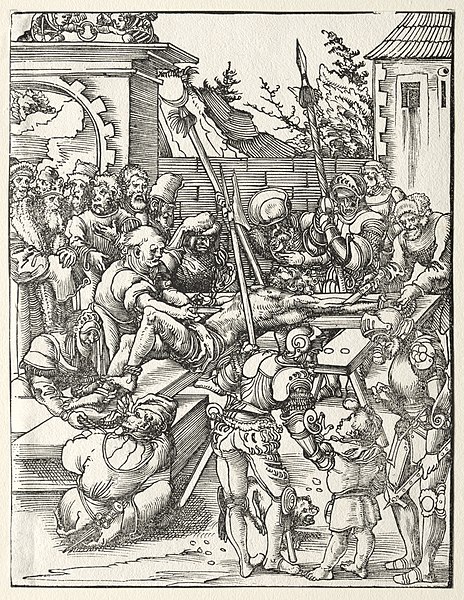
After his travels to India, tradition relays that he spent his final years preaching in Armenia. As he was preaching in Albanus (modern-day Derbend) and converting the pagans there from their idolatry, Astyages was enraged by the conversions (possibly even of his brother, the king!) and ordered Bartholomew to be put to death for his preaching, a sentence that was carried out by skinning him alive. Ever a faithful witness to our Lord, however, he submitted joyfully to a martyr’s death and is said to have comforted and counseled his Gentile converts to the very end.
A Brief History
As one of our Lord’s Apostles, St. Bartholomew has been commemorated in the Church from the earliest centuries following his martyrdom. There is, however, some disagreement regarding the date of his commemoration, with the Eastern Orthodox churches commemorating him with St. Barnabas on June 11 and the Western Church celebrating his feast on August 24 since at least the eighth century. The reason for the difference in dating is unclear.
Since martyrs are often connected with the instruments of their martyrdom, St. Bartholomew has often been associated with a knife, the instrument that was used to skin him alive. Consequently, St. Bartholomew’s Day has sometimes been celebrated with some interesting knife-related customs. Croyland Abbey in England, for example, had a custom in the Middle Ages of distributing little knives every year on St. Bartholomew’s Day, a tradition that was later discontinued, likely for safety or financial reasons.
St. Bartholomew’s Day is also somewhat famous in Western history because of the event commonly known as the St. Bartholomew’s Day Massacre, the historic slaughter of French Protestants during the wars of religion that took place on St. Bartholomew’s Eve (August 23-24) in the year 1572.
Collect
Almighty God, who through Thy Son Jesus Christ didist choose Saint Bartholomew to be an Apostle to preach the blessed Gospel: give unto Thy church evermore faithful teachers, to proclaim the glory of Thy Name; through the same, Jesus Christ, Thy Son, our Lord, who liveth and reigneth with Thee and the Holy Ghost: ever one God, world without end. Amen.
Lessons
First Lesson
Epistle
Resources
Issues, Etc. interview with the Rev. David Petersen on St. Bartholomew
Propers found in Daily Divine Service Book: A Lutheran Daily Missal, edited by the Rev. Heath Curtis
References:
1. Dickinson, William Leeson. The Lives of the Saints; or Ecclesiological and Historical Notes on the Holy Days of the English Church. The Church Printing Company. 1865.
2. Pfatteicher, Philip H. Festivals and Commemorations: Handbook to the Calendar in Lutheran Book of Worship. Augsburg Publishing House. 1980.
Images:
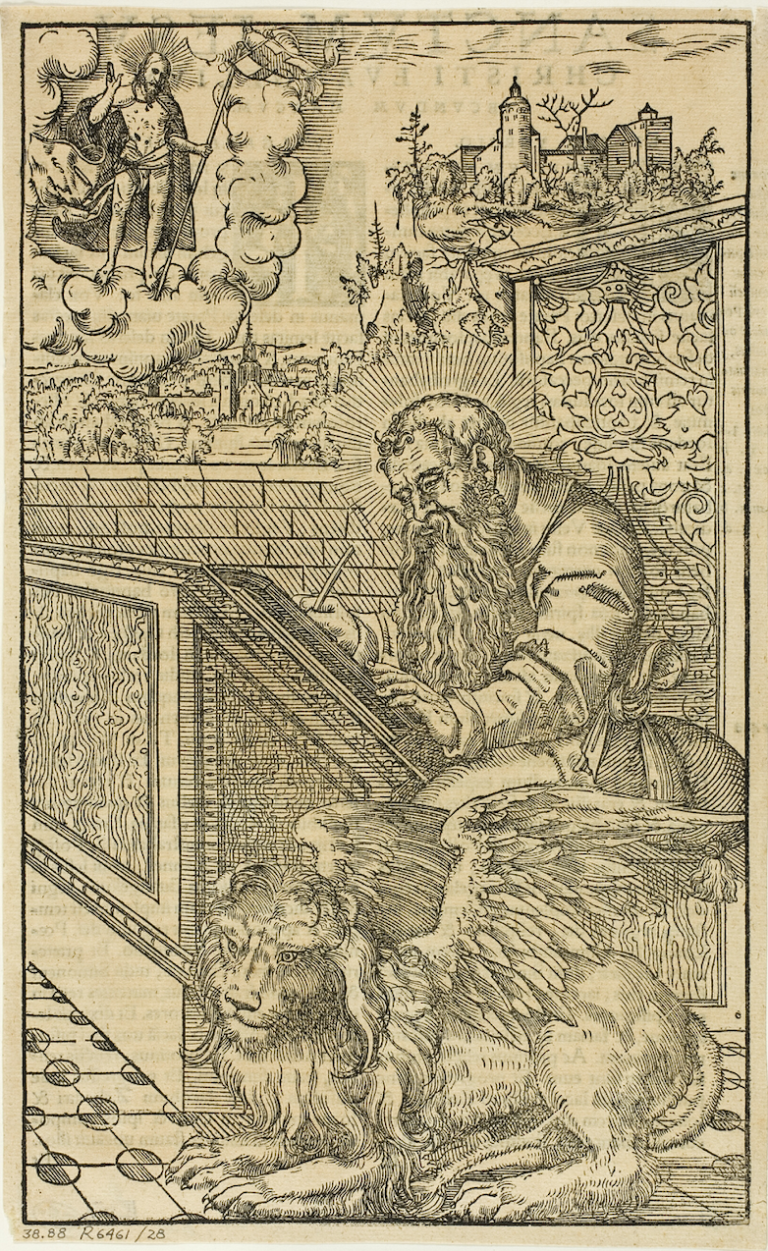
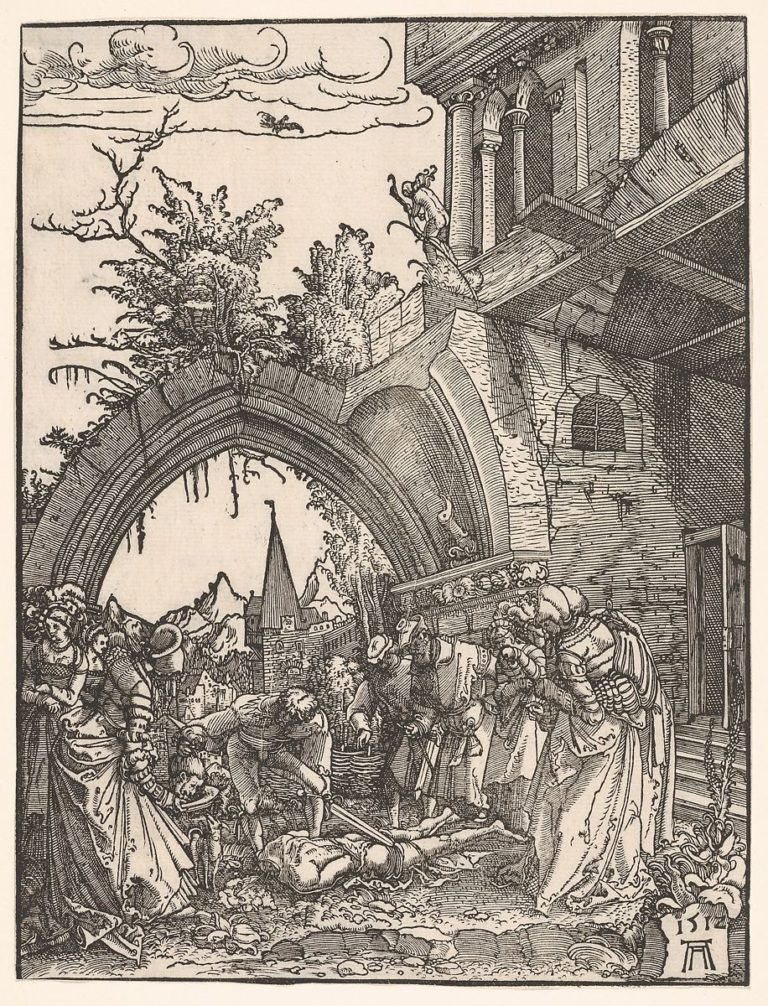
1. Lucas Cranach, Martyrdom of St. Bartholomew, Germany, 16th Century.
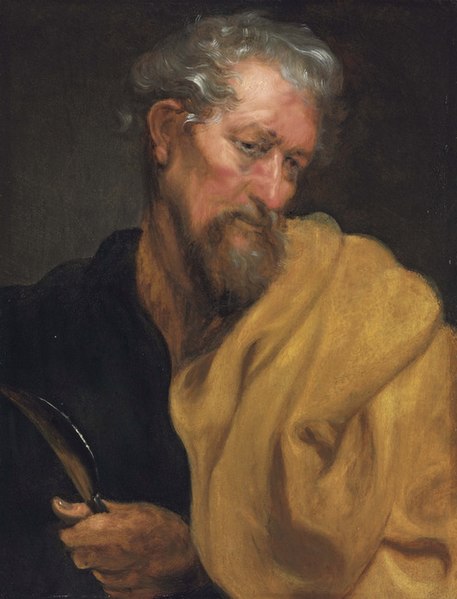
2. Anthony van Dyck, The Apostle Saint Bartholomew, England, 1617-1621.